IRS $2,000 Direct Deposit Rumors Resurface in January 2026 — What the Federal Government Has Actually Confirmed
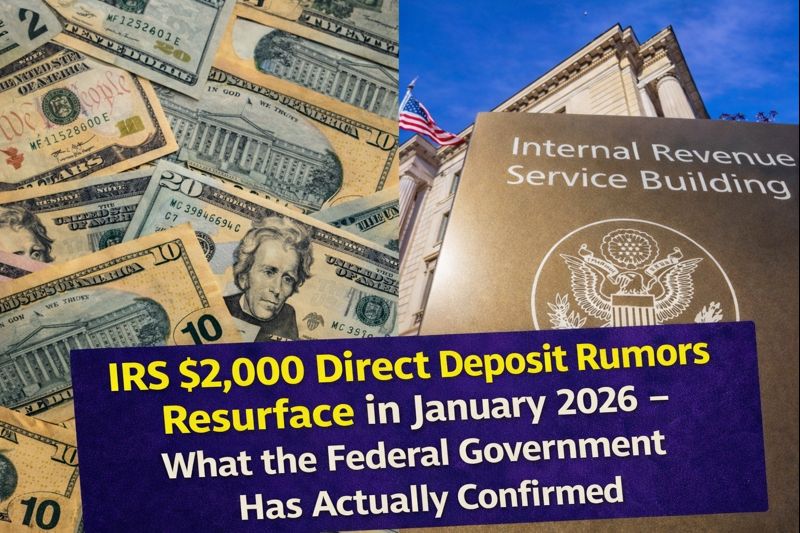
As the new year begins, social media platforms are once again flooded with claims that the Internal Revenue Service (IRS) has approved a $2,000 direct deposit for Americans in January 2026. Viral posts, short videos, and blog headlines suggest a “final stimulus-style payment” or a quiet relief deposit already moving through the system.
While the idea of extra financial support is appealing, especially after a costly holiday season, federal records tell a very different story. Here’s what has actually been confirmed — and what remains misinformation.
The Truth About the $2,000 IRS Payment
As of January 13, 2026, there is no approved $2,000 direct deposit authorized by the IRS or the U.S. Congress. Any nationwide payment of this kind would require formal legislation passed by Congress and signed into law by the President.
No such legislation appears in congressional records, Treasury releases, or official IRS announcements. The IRS Newsroom has not issued any guidance supporting these claims.
Why These Claims Keep Coming Back
The rumors resurfacing in January are largely recycled versions of past stimulus narratives. Many misleading articles simply update old headlines from 2020 or 2021 and replace the year, creating the illusion of new federal action.
Some posts also reference vague political discussions around inflation relief, tariff revenue, or economic stimulus concepts — none of which have translated into an actual payment program.
Payments That Are Actually Being Sent
Although there is no new $2,000 program, several legitimate federal payments are still being issued, which can confuse recipients:
- Delayed or corrected tax refunds from previous filing years
- Supplemental Security Income (SSI) schedule shifts that sometimes result in two deposits in one month
- Ongoing Social Security and SSDI benefits administered by the Social Security Administration
These routine payments are not stimulus checks and should not be interpreted as new relief programs.
Scam Warnings Are Increasing
Whenever stimulus rumors trend, scams follow. Fraudulent websites and social media ads are now claiming users must “register” or “verify banking details” to receive the $2,000 deposit.
Federal agencies have repeatedly warned that the IRS never requires applications, forms, or upfront verification for stimulus-style payments. Any site asking for Social Security numbers or bank logins should be avoided.
Official tax and payment updates are only published through trusted government portals such as the U.S. Department of the Treasury.
How to Verify Future IRS Payments
If new direct payments were ever approved, the announcement would appear simultaneously across:
- Official IRS press releases
- Congressional records
- Major national news outlets
Until then, claims circulating exclusively on social media or low-credibility blogs should be treated as misinformation.
Quick Facts — January 2026
- No $2,000 IRS direct deposit has been approved
- No legislation authorizing new stimulus payments exists
- Current deposits are tied to existing tax and benefit programs
- Scam attempts tied to stimulus rumors are increasing
Viral Claims vs. Verified Reality
| Claim | Reality |
|---|---|
| $2,000 payment approved | No federal authorization |
| January 2026 payout date | No payment scheduled |
| Application required | IRS does not require applications |
| Source: social media | No confirmation from IRS or Treasury |
Bottom Line
As of mid-January 2026, the widely shared $2,000 IRS direct deposit claim remains false. Americans should rely only on official government sources and remain cautious of viral financial promises that sound urgent but lack documentation.
If federal relief payments return in the future, they won’t arrive quietly — and they won’t require you to click a link to claim them.